


Exhibitions at the Hans Fallada Museum
Special exhibition
“Curtain up for Fallada” – posters and programmes
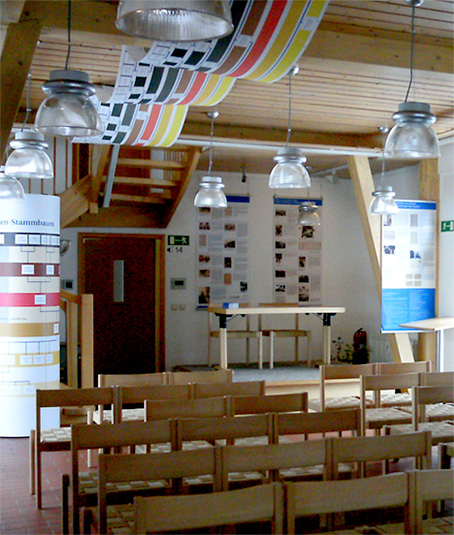
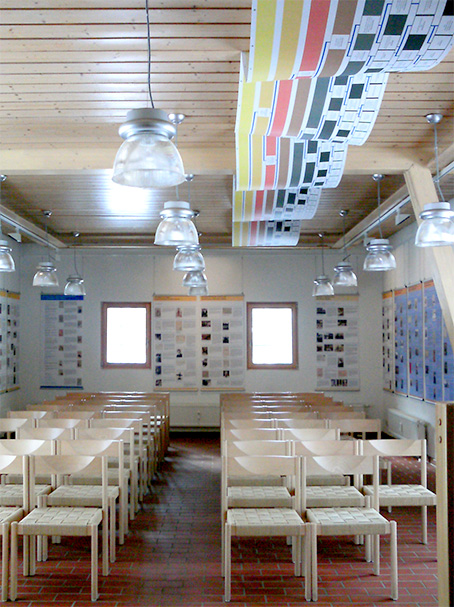
The special exhibition “Curtain up for Fallada” will be on display in the barn gallery of the Hans Fallada Museum until June 2026. It was prompted by a donation from the Swiss German studies scholar Johannes Matthias Schläpfer-Wochner, who presented the museum with an extensive collection of posters and programmes from stage productions of Fallada’s works during the 34th Hans Fallada Days.
Without claiming to be exhaustive, Johannes Schläpfer identified 141 productions of Little Man, What Now? and 30 productions of Alone in Berlin between 1972 and 2025. These two works are therefore represented by the largest number of posters in the exhibition.
The exhibition was funded by the Association of Literary Societies and Memorial Sites using funds provided by the Federal Government Commissioner for Culture and the Media. It can be visited during the museum’s opening hours, and a museum admission ticket also includes admission to the special exhibition.
Travelling exhibitions
“If a book really captivates me” – Hans Fallada as a literary critic
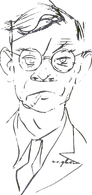
Hans Fallada was an avid reader and a great connoisseur of literature. He took an active part in the literary life of the Weimar Republic, including as a critic and publicist. The Hans Fallada Society’s exhibition about Fallada as a critic, which remained on display in the barn gallery of the Hans Fallada Museum beyond 2023, draws attention to this largely unknown side of the writer.
It reflects the full range of Fallada’s interests: novels, children’s books, poetry of everyday life, reportage, political non-fiction and even books about gardening.
Hans Fallada – Family portraits
But how can I measure up in your eyes, my very dear relatives?!
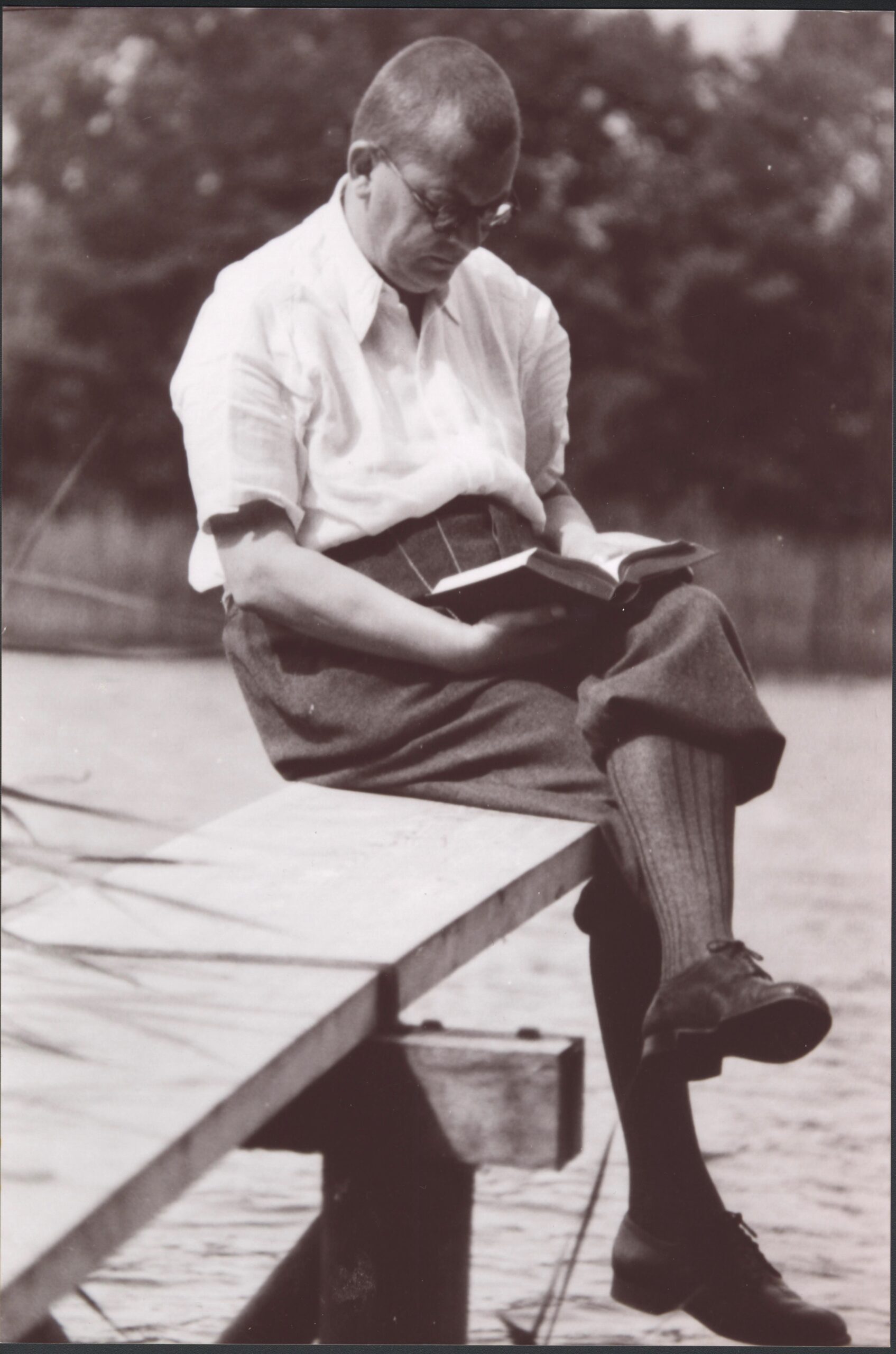
The Hans Fallada Society’s exhibition “Hans Fallada – Family portraits. But how can I measure up in your eyes, my very dear relatives?!” draws on the rich holdings of the Hans Fallada Archives and focuses on memories, letters and photographs of the Ditzen family. Most of this material is being made public for the first time.
Extensive research in archives and collections throughout Germany brought details of family members’ lives to light. Sixteen biographical panels and six thematic panels, featuring 248 photographs and documents, create an individual portrait of a middle-class family from the mid-sixteenth century to the end of the Second World War.
The presentation centres on the writer Hans Fallada, who saw himself as “a link in an endless chain”, as well as on his letters and literary work. An impressive family tree completes the exhibition.
The exhibition was developed by the German studies scholar and head of the Hans Fallada Archives Erika Becker, Hans Fallada’s youngest son Achim Ditzen, and cultural studies scholar Heide Hampel. Dieter Urban designed the family tree, Caterina Muth was responsible for the artistic design, and Steffen GmbH in Friedland produced the exhibition. Archives, museums and private individuals from all over Germany contributed materials, information and practical assistance.
Quotations from Hans Fallada’s works and letters are reproduced with the kind permission of Aufbau Verlag in Berlin. This Hans Fallada Society project was funded by the Ministry of Education, Science and Culture of Mecklenburg-Western Pomerania and by the Association of Literary Societies and Memorial Sites using funds provided by the Federal Government Commissioner for Culture and the Media.
The exhibition is available to interested museums, memorial sites and institutions as a travelling exhibition. Please direct enquiries to:
Hans-Fallada-Gesellschaft e. V.
OT Carwitz
Zum Bohnenwerder 2
17258 Feldberger Seenlandschaft
Telephone/Fax: +49 39831 20359
Email: hfg@fallada.de
Otto and Elise Hampel – Please pass the card on!
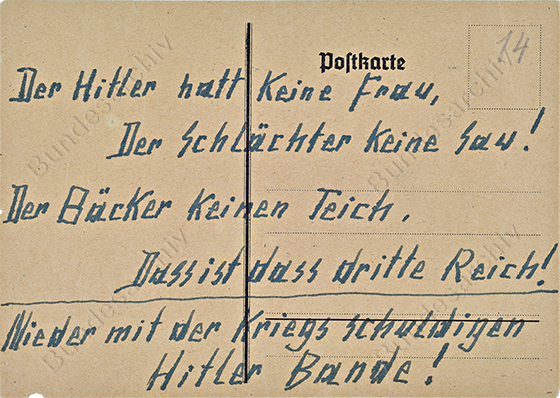
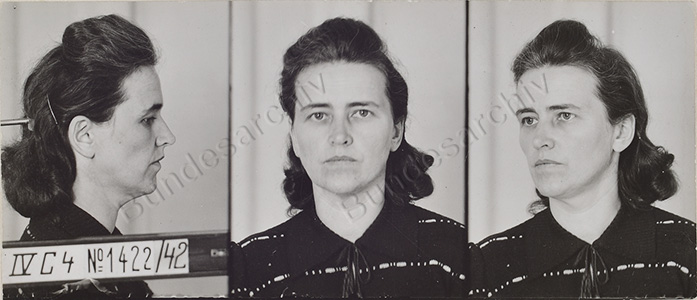
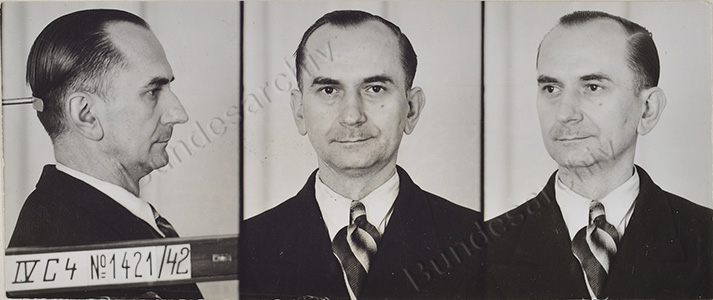
Between 1940 and 1942, Otto and Elise Hampel, an unassuming working-class couple from Berlin, used postcards and leaflets to call for the overthrow of the Nazi regime and an end to the war.
As far as we know today, the great majority of the well over 200 postcards and leaflets that the Hampels left in stairwells and letterboxes were handed over to the police by the people who found them. After two years of illegal underground activity, the Hampels were caught and denounced. Sentenced to death by the People’s Court in 1943, they were executed by guillotine at Plötzensee later that year.
Hans Fallada transformed the Hampels’ story into literature in his novel Alone in Berlin, published posthumously in 1947. The exhibition focuses on photographic reproductions of the original postcards and leaflets held by the German Federal Archives.
Curator Christian Winterstein, chair of the Hans Fallada Society, wishes to remind us that even in a society marked by pressure to conform and barbaric rule, there were people who did not lose their sense of justice; people who, isolated and dependent on their own resources, found the courage and hope to offer practical resistance.
Photographs and an introductory text add context to the presentation. Christian Winterstein is also available to give talks and present his reading Who Were Otto and Elise Hampel? The exhibition has been touring museums, libraries and cultural institutions throughout Germany successfully since 2015.
Enquiries may be directed to Christian Winterstein at info@christianwinterstein.de or by telephone on +49 152 118 118 89.
‘Nothing else new.’ The wartime letters of Ulrich Ditzen (1896–1918)
The special exhibition “‘Nothing else new.’ The wartime letters of Ulrich Ditzen (1896–1918)” opened during the 28th Hans Fallada Days on 20 July 2018.
Ulrich Ditzen was Hans Fallada’s younger brother. At the outbreak of the First World War, he left school to volunteer for military service and spent almost four years on the Western Front near Lille. In August 1918, only a few weeks before the end of the war, he was buried by shellfire. More than 500 letters and almost 300 photographs that he sent to his family during his deployment have survived and form the subject of this exhibition.
The postcards, letters and photographs offer a wide range of insights into soldiers’ lives and military service. Alongside harrowing encounters with death and violence, they contain amusing anecdotes about comrades and superiors, gripping accounts of combat operations, and the ever-present pursuit of the coveted military decoration, the Iron Cross. Comments on propaganda portraying the enemy alternate with reflections on the all-male society at the front, interwoven with a wide range of reading impressions and Ulrich Ditzen’s personal answer to the question: What was the war really like?